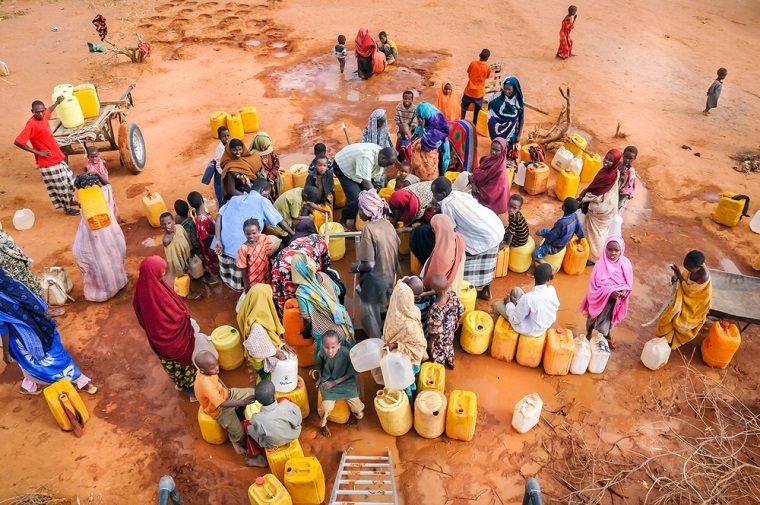
Rain in the drylands is scarce and short-lived. Capturing every drop can mean the difference between staying and leaving when drought strikes.
In the drylands of northern Kenya, southern Ethiopia and Somalia, it may rain heavily for a few days and then not at all for months. Much of that precious rainfall runs off hard ground and evaporates. Simple water harvesting techniques allow communities to capture it — for people, livestock and crops.
1. Water pans
A water pan is an excavated depression that collects surface runoff. Communities have used them for generations. Desilting old pans and building new ones — with inlets that filter sediment and fences that keep animals out of the main pool — can provide water for weeks or months after the rains.
2. Rock catchments
Where there are large rock surfaces, low walls can channel rainwater into storage tanks. Rock catchments provide relatively clean water with minimal evaporation.
3. Rooftop rainwater harvesting
Schools, health centres, mosques and homes with metal roofs can collect rain through gutters into tanks. Even a modest roof can collect thousands of litres in a single rainy season — enough to give schoolchildren drinking water close to class.
4. Sand dams and subsurface dams
Built across seasonal riverbeds, sand dams trap sand behind a wall. Water is stored in the spaces between sand grains, protected from evaporation, and can be drawn through shallow wells long after the river runs dry.
5. In-field techniques for crops and pasture
Semi-circular bunds, zai pits and contour trenches slow runoff and help water soak into the soil — supporting crops and rangeland reseeding.
Managing water fairly
Infrastructure is only half the story. Water points are often flashpoints for conflict between communities. VOPA supports water management committees that include women and representatives of neighbouring communities, with clear rules for sharing and maintenance. In this way, water becomes a reason to cooperate instead of a reason to fight.
The payoff
Every extra week a family can stay in place with its livestock means children stay in school, women spend less time walking for water, and herds stay healthier. Explore our Water Harvesting for Drought Resilience project, or read about climate change and pastoralism.

VOPA builds peace, resilience and dignity with communities in Kenya, Somalia and Ethiopia. About us